
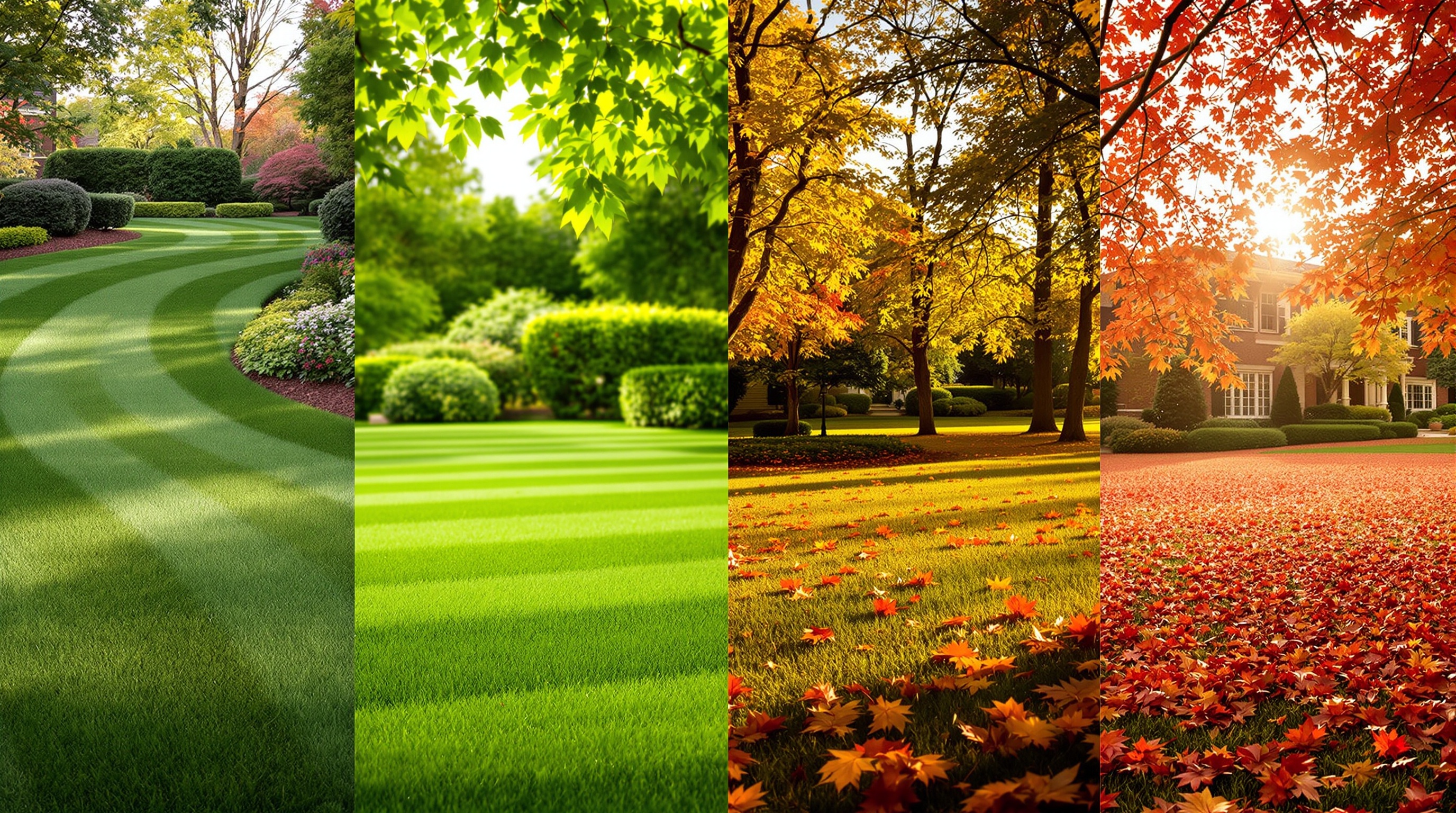
Northern Virginia is one of the more demanding climates for lawn care in the eastern U.S. — hot, humid summers, clay-heavy soil, unpredictable late frosts, and a grass type (tall fescue) that demands completely different care in spring versus fall. Most lawn care advice online is written for the Southeast or Midwest and simply doesn't apply here.
This guide is written specifically for Loudoun County, Fairfax County, Prince William County, and the greater Northern Virginia region — the soil types, the climate patterns, and the cool-season turf that most NoVA homeowners have. If you follow this calendar, your lawn will be healthier, thicker, and more weed-resistant than 90% of yards on your street. If you're in Winchester, Woodstock, Front Royal, or anywhere in the Shenandoah Valley, see our separate Shenandoah Valley lawn care guide — the timing and soil conditions there are different enough that NoVA timing doesn't transfer directly.
First: Know What Grass You Have
The vast majority of Northern Virginia lawns are seeded with tall fescue — a cool-season grass that thrives in spring and fall but goes dormant or struggles in peak summer heat. Understanding this shapes every decision in this guide.
Cool-Season Grass (Tall Fescue)
- Actively grows spring & fall
- Goes semi-dormant in summer heat
- Best seeded/overseeded in September–October
- Prefers 3–4 inch mow height
- Common in 95%+ of NoVA residential lawns
Warm-Season Grass (Zoysia / Bermuda)
- Grows in summer, goes brown in fall/winter
- Less common in Northern Virginia
- Doesn't tolerate shade well
- Different fertilization calendar
- Some newer NoVA neighborhoods use it
This guide assumes tall fescue. If you have zoysia or bermuda, the timing for fertilization, seeding, and dormancy care is reversed — contact us and we'll walk you through the right schedule.
February – May
Spring: The Most Critical Window of the Year
Spring is where most NoVA homeowners either set up a great lawn season or fall behind and spend the rest of the year chasing problems. The key is acting early — several spring tasks have hard deadlines that can't be made up once missed.
Late February – Early March: Pre-Emergent Herbicide
This is the single most important task of the spring season. Pre-emergent herbicide prevents crabgrass and other summer annual weeds from germinating — but it only works if applied before soil temperatures consistently reach 55°F at a 2-inch depth. In Northern Virginia, that window is typically late February through mid-March, though it varies by year. For the full spring task sequence, see our 12-step spring landscaping checklist for Northern Virginia.
Miss this window and you're dealing with crabgrass all summer. Key points:
- Apply at the first sign of forsythia blooming — this is a classic timing indicator local to NoVA
- If you plan to overseed bare areas, skip pre-emergent in those spots (it prevents ALL seeds from germinating)
- A second application 6–8 weeks later extends the window of protection through early summer
- Granular products are fine for most homeowners; liquid applications offer more even coverage on large areas
Early March: Spring Clean-Up & Bed Edging
Remove matted leaves, dead ornamental grass stalks, and winter debris as soon as the ground is firm enough to work without compacting. Re-edge all beds with a sharp spade or mechanical edger before mulching — this gives you a clean defined line that makes everything look intentional rather than neglected.
March – April: Light Spring Fertilization
Apply a light, slow-release nitrogen fertilizer (about 0.5 lbs N per 1,000 sq ft) in early spring once the lawn starts actively greening up. Do not over-fertilize in spring. Excess nitrogen pushes excessive top growth at the expense of root development — and lush, rapidly growing turf is more susceptible to disease and summer stress.
Think of spring fertilization as a light breakfast, not a feast. Save the main feeding for fall.
April: Irrigation Start-Up & Inspection
Before turning on your irrigation system, walk every zone and check for: broken heads, misaligned sprinklers, cracked lateral lines (often from freeze damage), and proper coverage overlap. At least 1 in 3 systems we inspect in spring has a hidden issue from winter. A zone running at partial coverage creates dry patches you'll spend the summer trying to diagnose.
Spring Mowing Tip
First mow of the season: set the blade high (3.5–4 inches for tall fescue). Never cut more than 1/3 of the blade height in a single mow. If the lawn has grown tall over winter, step down gradually over 2–3 mows rather than scalping it in one pass. Scalping stresses turf and opens the soil to weed competition.
April – May: Mulch Application
Fresh mulch (2–3 inches deep) suppresses weeds, retains moisture, and insulates roots during temperature swings. Apply after edging and after any pre-emergent has been down for at least a few days. Always maintain a 2–3 inch gap around tree trunks and shrub stems — piled mulch against woody stems traps moisture and causes rot over time.
June – August
Summer: Protect Mode, Not Growth Mode
Summer in Northern Virginia is genuinely hard on cool-season turf. July and August temperatures regularly hit 90–95°F with high humidity, and tall fescue doesn't love it. Your goal in summer isn't to push growth — it's to keep what you have healthy, prevent disease, and set up a strong fall recovery.
Mowing: Go Tall and Consistent
Raise your mowing height to 4 inches for tall fescue in summer. Taller grass shades the soil, reduces surface temperature, retains moisture longer, and competes better against weeds. This is the single easiest change most homeowners can make to dramatically improve summer lawn health.
- Never cut more than 1/3 of the blade in one pass
- Mow when grass is dry — wet grass tears rather than cuts cleanly
- Keep blades sharp — dull blades leave brown ragged tips and increase disease risk
- During extreme heat (95°F+), skip mowing if possible — stressed turf doesn't need additional stress
Watering: Deep and Infrequent
Tall fescue needs about 1–1.5 inches of water per week during summer, including rainfall. The key is deep, infrequent watering — not light daily sprinkles. Deep watering (long enough to wet the soil 6 inches down) trains roots to grow deeper, making turf more drought-tolerant and disease-resistant.
Wrong Approach
- Water 5–7 days a week for 10 minutes
- Keeps soil surface moist
- Trains roots to stay shallow
- Promotes fungal disease
- Grass dies quickly in drought
Right Approach
- Water 2–3 times per week for 30+ minutes
- Saturates soil 6 inches deep
- Trains roots to grow deep
- Drier surface = less disease
- Lawn handles heat stress much better
Fertilization: Pause in Summer
Do not fertilize tall fescue in July or August. Fertilizing cool-season grass during heat stress pushes forced growth when the plant is already struggling, dramatically increases disease susceptibility, and can cause burn. Hold all nitrogen applications until September.
Watch for Summer Patch Diseases
The combination of heat, humidity, and irrigation in Northern Virginia creates ideal conditions for fungal diseases. The most common ones we see on NoVA lawns:
- Brown patch — Large circular tan/brown areas with a darker outer ring. Very common on over-watered or over-fertilized tall fescue in July–August.
- Dollar spot — Small silver-dollar-sized spots, often in low-fertility or drought-stressed lawns.
- Summer patch — Ring-shaped dead areas on stressed turf, often caused by poor irrigation coverage or compacted soil.
If you spot circular dead areas forming, stop watering in the evening (morning watering allows foliage to dry during the day) and contact a professional before applying fungicide — misidentification is common.
The Summer Dormancy Trap
When tall fescue turns tan/brown in August, many homeowners assume their lawn is dead and panic-water it or call for emergency treatment. Often it's just summer semi-dormancy — a survival mechanism. Allowing the lawn to go lightly dormant in extreme heat is fine and it will recover in September. What kills lawns is going from dormancy to heavy stress watering which can trigger disease. When in doubt, call us for a free assessment before treating.
September – November
Fall: The Most Important Season for Your Lawn
If you had to pick one season to invest in your Northern Virginia lawn, make it fall. Cool-season turf like tall fescue grows most vigorously when temperatures drop into the 60s–70s, which means September through November is peak root development time. Everything you do in fall pays dividends next spring.
September: Aeration — The Most Impactful Single Task
Core aeration in early September is the best thing you can do for a Northern Virginia lawn. Our clay-heavy soil compacts over the summer from foot traffic, mowing, and heat — aeration pulls 2–3 inch soil cores out of the ground, relieving compaction, improving water and oxygen penetration to roots, and creating channels for new seed to make direct soil contact. We go deep on everything you need to know in our dedicated fall aeration guide for Loudoun County lawns.
Combine aeration with overseeding immediately after for the best results — the cores create micro-environments where new seed germinates at dramatically higher rates than broadcast seeding on hard soil.
Aeration Timing for Northern Virginia
Target: First 2 weeks of September. Soil should still be warm enough for new seed to germinate (above 50°F), but air temperatures should be cooling down. Too early (August) and disease pressure is still high. Too late (October) and new grass doesn't establish before first frost.
September: Overseeding Thin or Bare Areas
Fall is the only time we recommend overseeding cool-season lawns in Northern Virginia — not spring. Reasons:
- New fall seedlings establish roots before winter and explode out of dormancy in spring
- Spring overseeding competes with pre-emergent herbicide — you're choosing between crabgrass control and new seed
- Weed competition is lower in fall — fewer summer annuals to compete with new grass
- Cooler temps reduce disease pressure on tender new seedlings
Use a quality tall fescue blend appropriate for your yard's sun/shade conditions. For shady areas (a common challenge in NoVA with mature tree canopies), look for blends with fine fescue mixed in.
September – October: Fall Fertilization (The Big One)
This is the most important fertilization of the year. Apply a complete fertilizer with higher potassium in early fall (around aeration/overseeding time) to fuel root development, then a second application of slow-release nitrogen in late October to build carbohydrate reserves for winter. This "feeding for roots" approach is what separates lawns that green up fast in March from those that struggle all spring.
October: Leaf Management
Don't let leaves sit on your lawn. A thick layer of leaves blocks sunlight and traps moisture, creating ideal conditions for snow mold and other diseases that you'll discover in March. Options:
- Mulch-mow thin layers — running the mower over light leaf coverage chops them fine and adds organic matter to the soil
- Blow and bag heavy coverage — dense whole-leaf layers need to be removed, not mulched
- Never mulch black walnut leaves into lawn areas — they contain juglone, which is toxic to many plants
October – November: Irrigation Winterization
Your irrigation system must be blown out and winterized before the first hard freeze. In Northern Virginia, that typically means mid to late October, though some years you can push to early November. Water left in lateral lines expands when frozen and cracks pipe — a repair that costs several hundred dollars and is entirely preventable.
This requires compressed air to blow out each zone — a process that should be done by someone who knows the right pressure for your specific pipe size (too much pressure damages heads and valves). We winterize irrigation systems throughout Loudoun and Fairfax Counties every fall.
December – February
Winter: Protect, Plan, and Prepare
Northern Virginia winters are mild enough that your lawn doesn't fully shut down — tall fescue often stays green well into December and starts recovering in late February. But there are still several important things to do (and avoid) in the dormant season.
Last Mow of the Season
Give the lawn one final mow in late November or early December, cutting to about 2.5–3 inches — slightly shorter than summer height. Long grass going into winter can mat down under snow or ice, creating favorable conditions for snow mold and fungal disease. Don't scalp it, but don't leave it long either.
De-Icing Salt: The Hidden Lawn Killer
Rock salt (sodium chloride) used on driveways and sidewalks is one of the most common causes of lawn damage we see in Northern Virginia — particularly in strips along the road or the edge of the driveway. Salt pulls moisture out of grass roots and alters soil chemistry.
What to do:
- Use calcium chloride or magnesium chloride ice melters where possible — significantly less harmful to turf than sodium chloride
- Apply sparingly and only on paved surfaces, not lawn areas
- Flush salt-affected areas thoroughly with water in early spring to dilute concentration
- Overseed salt-damaged areas in September — spring overseeding in damaged spots often fails because pre-emergent is already down
Stay Off Frozen or Frost-Covered Turf
Walking on frozen grass is more damaging than most people realize. Frozen turf blades are brittle and crack under foot traffic — you'll see brown footprint-shaped patches for weeks afterward. Keep foot traffic off the lawn when it's frosted over in the morning, and avoid parking or driving on lawn areas in winter.
January – February: Plan Your Spring Projects
Winter is the ideal time to plan any major outdoor improvements for the coming year. Our spring schedule — for patio installations, retaining walls, drainage projects, and major landscape overhauls — typically fills up in February and March. If you're considering a project for this year, reach out now rather than in May when availability is tight.
Winter is also the best time to get a head start on pre-emergent timing, soil tests (results take a few weeks), and any hardscape repairs from winter heave that you want addressed early in the season.
Month-by-Month Quick Reference
Northern Virginia tall fescue lawn — save this and refer to it every season
February
Spring
- Watch for forsythia bloom — pre-emergent window opening
- Schedule spring clean-up crew
- Get soil test if not done in fall
March
Spring
- Apply pre-emergent herbicide (before soil hits 55°F)
- Complete spring clean-up & bed edging
- Prune ornamental grasses and perennials
- Inspect trees/shrubs for winter damage
April
Spring
- Irrigation spring start-up & zone inspection
- Light fertilization (0.5 lb N / 1,000 sq ft)
- Apply fresh mulch 2–3 inches
- Begin regular mowing at 3.5–4 inches
May
Spring
- Second pre-emergent application (if desired)
- Monitor for grub damage (treat proactively if history)
- Book fall aeration now — slots fill fast
June
Summer
- Raise mow height to 4 inches
- Switch to deep watering 2–3x/week
- Monitor for brown patch and dollar spot
- Do NOT fertilize
July
Summer
- Continue deep watering schedule
- Mow only when needed, blades sharp
- Allow light dormancy if heat is extreme
- No fertilizer, no overseeding
August
Summer
- Prepare for fall aeration (schedule now)
- Buy overseeding seed
- Spot-treat weeds if needed
- Continue deep watering if no rain
September
Fall
- Core aeration (first 2 weeks = ideal timing)
- Overseed immediately after aeration
- First fall fertilization — complete fertilizer
- Reduce mowing frequency as temps cool
October
Fall
- Second fall fertilization (late October)
- Stay on top of leaf management
- Irrigate newly seeded areas as needed
- Schedule irrigation winterization
November
Fall
- Winterize irrigation system before first hard freeze
- Final mow — lower to 2.5–3 inches
- Complete leaf removal from lawn
- Service and store lawn equipment
December
Winter
- Avoid walking on frozen/frosted turf
- Use salt alternatives near lawn areas
- Review project ideas for spring
- Order spring project materials or schedule estimates
January
Winter
- Contact us for spring estimates before the rush
- Get soil test if planning to overseed
- Research pre-emergent products/timing for your area
- Review irrigation system — plan any upgrades
Based in Leesburg, VA
Want Us to Handle All of This for You?
Our lawn maintenance programs cover everything in this guide — pre-emergent timing, seasonal fertilization, fall aeration & overseeding, irrigation start-up & winterization, and year-round scheduled care. Serving Leesburg, Ashburn, Brambleton, Sterling, Herndon, Chantilly, Gainesville, and all of Loudoun and Fairfax Counties.
Topics
P&L Outdoor Solutions
Leesburg, VA — Northern Virginia
Owner-operated landscaping, hardscaping, and outdoor construction firm serving all of Northern Virginia. Founded and owned by Victor Pastor, with business partner Grover Capriles — licensed, insured, and built on accountability.